Sale Price:
$139.95
Original Price:
$149.95
Red Stripe Angelfish / Live Saltwater Fish Eibl’s Angelfish / Dwarf Angelfish / Striking Red and Black Coloration
Common Names:
Red Stripe Angelfish, Eibl’s Angelfish, Eibl’s Pygmy Angelfish, Orangelined Angelfish, Blacktail Angelfish, Eibl’s Dwarf Angelfish
Scientific Name: Centropyge eibli
Minimum Tank Size: 70 gallons or larger
Aquascape: Large amounts of live rock are essential for grazing, hiding, and territory establishment.
Temperament: Semi-aggressive
Generally peaceful but may become territorial over time. Not recommended with other dwarf angelfish.
Reef Compatibility: Use caution
May occasionally nip at sessile invertebrates, coral polyps, or clam mantles.
The Red Stripe Angelfish (Centropyge eibli) is a visually striking dwarf angelfish admired for its elegant coloration and refined patterning. Its pearlescent silver-gray body is accented by multiple evenly spaced vertical stripes ranging from orange to deep red, creating a clean, high-contrast appearance. The rear portion of the body and caudal fin are jet black, sharply outlined by a brilliant sapphire-blue edge, adding depth and sophistication to its overall look.
This species is generally peaceful to semi-aggressive, with a calm demeanor that can become more assertive once the fish is fully established. It is best housed alone or as the only dwarf angelfish in the aquarium, as it may show territorial behavior toward similar species.
The Red Stripe Angelfish is an active grazer that spends much of its time picking at live rock surfaces, making it an engaging and dynamic addition to larger reef or fish-only systems.
Diet & Feeding
The Red Stripe Angelfish thrives on a varied, nutrient-rich diet that supports both coloration and long-term health.
Recommended foods include:
Frequent, varied feedings help reduce the likelihood of coral or invertebrate nipping in reef environments.
Breeding Notes
Breeding this species in captivity is extremely difficult. There are no visible external differences between males and females, making sex identification unreliable in home aquariums.
Great For
Large reef or fish-only saltwater aquariums
Hobbyists seeking a colorful, refined dwarf angelfish
Systems with abundant live rock for grazing
Aquarists experienced with semi-aggressive marine fish
Red Stripe Angelfish / Live Saltwater Fish Eibl’s Angelfish / Dwarf Angelfish / Striking Red and Black Coloration
Common Names:
Red Stripe Angelfish, Eibl’s Angelfish, Eibl’s Pygmy Angelfish, Orangelined Angelfish, Blacktail Angelfish, Eibl’s Dwarf Angelfish
Scientific Name: Centropyge eibli
Minimum Tank Size: 70 gallons or larger
Aquascape: Large amounts of live rock are essential for grazing, hiding, and territory establishment.
Temperament: Semi-aggressive
Generally peaceful but may become territorial over time. Not recommended with other dwarf angelfish.
Reef Compatibility: Use caution
May occasionally nip at sessile invertebrates, coral polyps, or clam mantles.
The Red Stripe Angelfish (Centropyge eibli) is a visually striking dwarf angelfish admired for its elegant coloration and refined patterning. Its pearlescent silver-gray body is accented by multiple evenly spaced vertical stripes ranging from orange to deep red, creating a clean, high-contrast appearance. The rear portion of the body and caudal fin are jet black, sharply outlined by a brilliant sapphire-blue edge, adding depth and sophistication to its overall look.
This species is generally peaceful to semi-aggressive, with a calm demeanor that can become more assertive once the fish is fully established. It is best housed alone or as the only dwarf angelfish in the aquarium, as it may show territorial behavior toward similar species.
The Red Stripe Angelfish is an active grazer that spends much of its time picking at live rock surfaces, making it an engaging and dynamic addition to larger reef or fish-only systems.
Diet & Feeding
The Red Stripe Angelfish thrives on a varied, nutrient-rich diet that supports both coloration and long-term health.
Recommended foods include:
Frequent, varied feedings help reduce the likelihood of coral or invertebrate nipping in reef environments.
Breeding Notes
Breeding this species in captivity is extremely difficult. There are no visible external differences between males and females, making sex identification unreliable in home aquariums.
Great For
Large reef or fish-only saltwater aquariums
Hobbyists seeking a colorful, refined dwarf angelfish
Systems with abundant live rock for grazing
Aquarists experienced with semi-aggressive marine fish


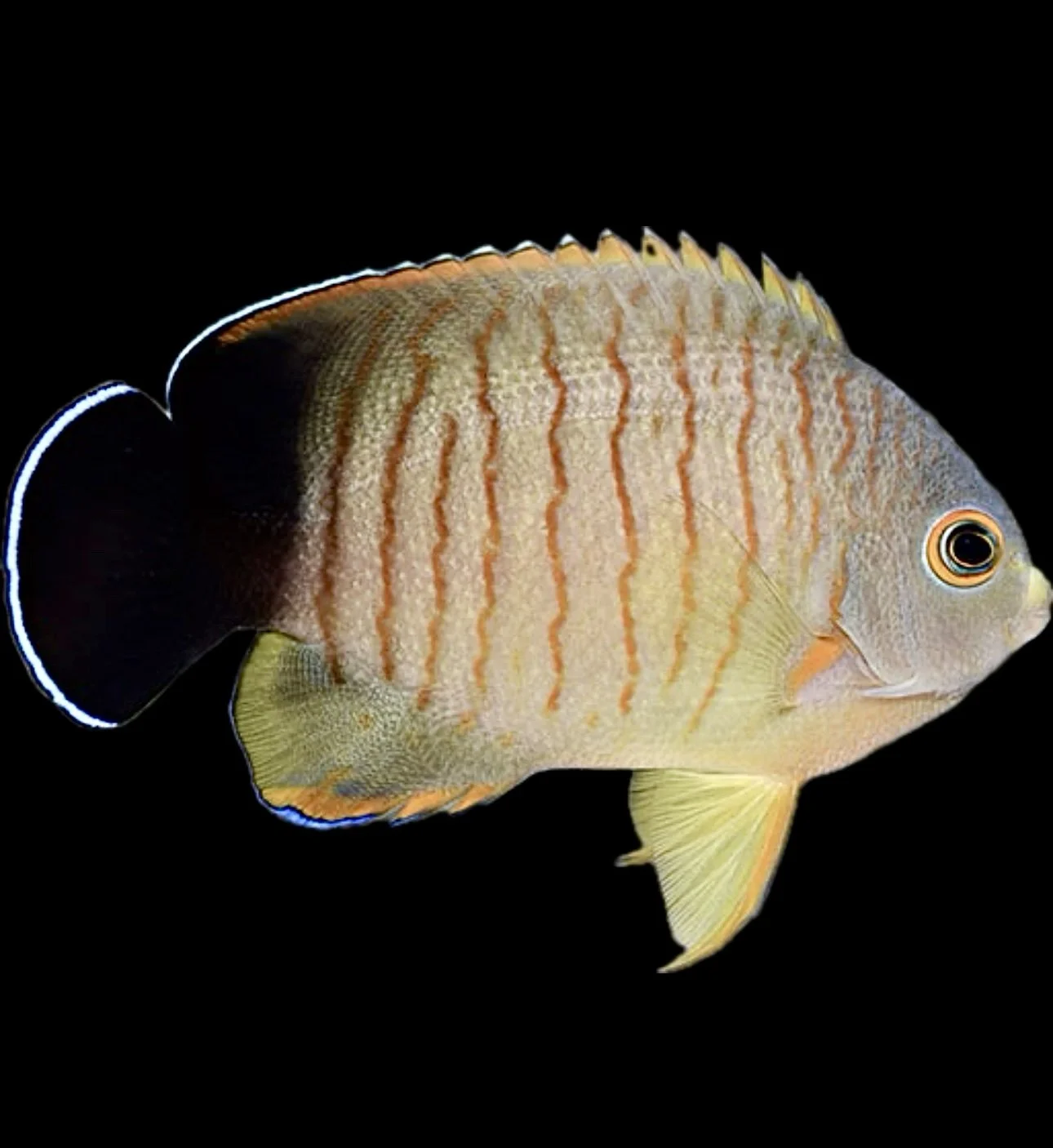 Image 1 of 2
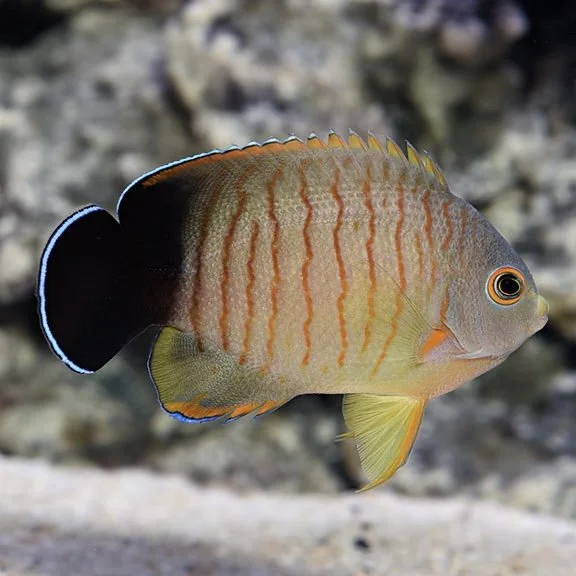 Image 2 of 2