

coralSLover® Coral Acclimation Guide
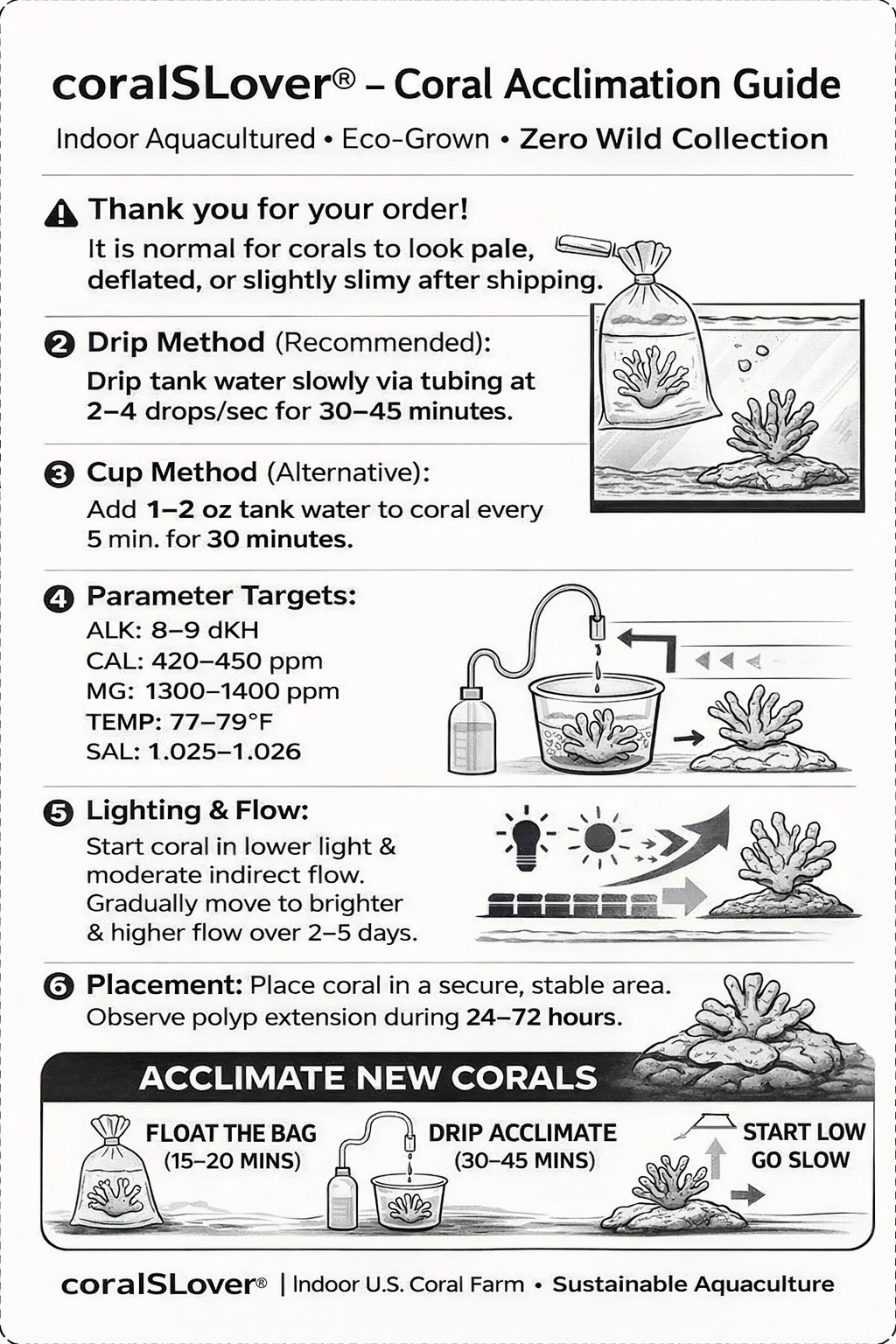
The proper acclimation of a new arrival is extremely important considering the amount of stress the coral has endured before arriving at your door. We recommend that the following procedure be followed immediately upon receipt of the livestock. The entire process is actually very simple and should take less than half an hour to complete.
Step 1: Turn the Aquarium Lights OFF
The livestock has been in complete darkness and will not immediately adjust to high output aquarium lighting. By turning off the lights, you remove a possible source of stress for the new arrival. Overexposure to light in general can be an issue with new additions to your reef tank. It only takes a day or two under high light conditions to severely damage a coral that was grown under more modest illumination.
Step 2: Empty the containers into a slightly larger tub
Typically we use a small plastic tub to acclimate the new corals. If you like, you can empty the containers with the coral into separate tubs, however when we receive new corals, we tend to place them in the same tub. The purpose of this is to provide enough volume to add in water from the aquarium as well as prepare a pest control dip solution.
Step 3: Add 1/2 cup of Aquarium Water every few minutes
The slower you add the water the better. Corals and other invertebrates are sensitive to fluctuations in pH and especially salinity. Some aquarists prefer drip acclimating corals making this process even more gradual, but one should consider the temperature drop-off that occurs during this time as well. The entire acclimation process should not take more than 30 minutes.
Step 4 (Optional): Pest Control Dip
At coralSLover®, all corals are produced in indoor, closed-loop aquaculture systems using recirculated saltwater. These controlled systems allow us to maintain strict oversight of coral health, water quality, and biosecurity, greatly reducing the risk of pests commonly introduced through wild-collected corals.
Because every coral we offer is fully aquacultured, and some of them decades from private collection the likelihood of hitchhikers such as flatworms, nudibranchs, or other unwanted organisms is significantly lower than with wild or recently imported corals. Our systems are routinely monitored and maintained, and we are especially vigilant against common nuisance organisms.
Aiptasia, one of the most concerning and widespread reef aquarium pests, is something we take very seriously. Our aquaculture systems are actively managed to remain free of Aiptasia, and we do not maintain or circulate stock from sources where this pest is present. Through long-term system stability and strict inspection protocols, our corals are maintained in environments that are free of Aiptasia and similar invasive anemones.
Even with this high level of control, we still promote best practices in reefkeeping. As an added precaution, we perform coral dips when transferring corals between systems within our facility. This proactive step is not in response to known issues, but part of a preventative approach designed to maintain the highest standards of cleanliness and coral health.
Commonly used dips include Coral Rx for common coral pests and Lugol’s iodine as a preventative measure for bacterial concerns. While no method can guarantee absolute elimination of all risks, aquacultured corals from closed, controlled systems like ours consistently present far fewer challenges compared to wild-sourced specimens.
We encourage hobbyists to inspect and dip new corals according to their own comfort level, but customers can be confident that corals from coralSLover® originate from a system with significantly higher control, stability, and pest prevention — including freedom from Aiptasia — than typical wild or mixed-source operations.
Step 5: Release the specimen into the tank
Find a suitable location where the new coral will receive the appropriate flow and lower light. It will need a few days to adjust to the new lighting. If you have access to a quarantine system, we recommend using the above method to first acclimate the new arrival. After the quarantine period is over, repeat the procedure to introduce the specimen into the display tank.
Additional Notes:
Coral may appear incredibly stressed when they arrive at your door. Shipping coral is one of the most stressful things we do, and that says a lot considering that many of them were propagated with a band saw! They literally just had the worst day of their lives in the shipping process so it may take a couple days before they regain any semblance of their prior appearance.
Stress however is not the same as a DOA. If you receive a coral that you think died during shipping, please let us know. You can find more information on our DOA policy.