 Image 1 of 1
Copperband Butterflyfish – Includes Fish Pack
from $149.95
(Chelmon rostratus)
Common Name: Copperband Butterflyfish
Scientific Name: Chelmon rostratus
Care Level: Advanced
Temperament: Peaceful to Semi-peaceful
Adult Size: Approximately 7–8 inches
Minimum Tank Size: 90 gallons
Reef Safe: With caution (May consume certain invertebrates such as anemones and feather dusters)
Diet: Carnivore. Frozen mysis, brine shrimp, clam, blackworms, specialized butterflyfish foods
Activity Level: Calm swimmer, constant forager
Also known as Beaked Butterflyfish, Beaked Coralfish, or Orange Stripe Butterflyfish
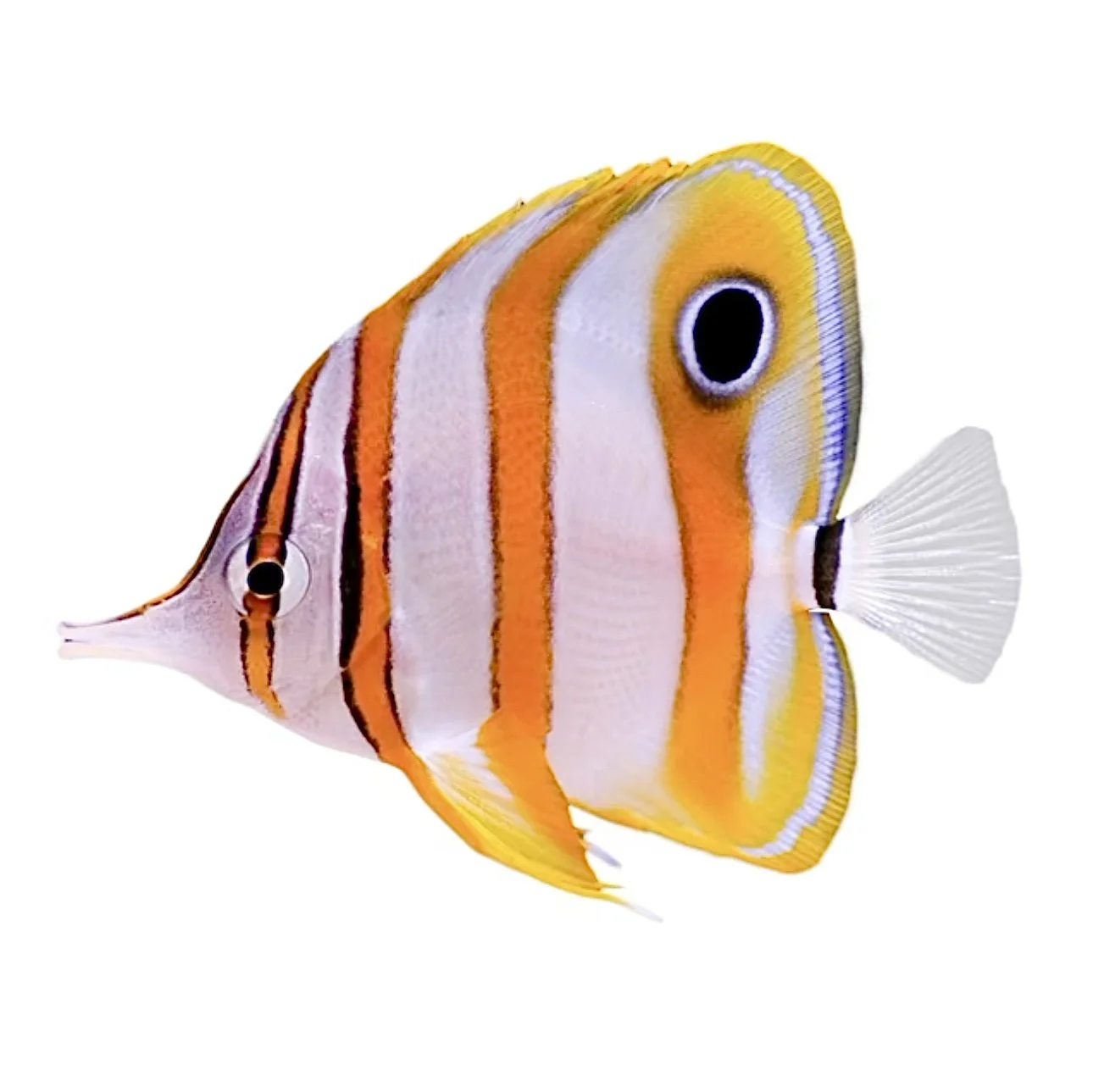
The Copperband Butterflyfish is a distinctive and elegant marine fish recognized for its long, narrow snout and bold vertical banding. Its elongated mouth is specially adapted for probing crevices, holes, and rockwork in search of food, making this species uniquely suited for natural foraging behavior in reef aquariums.
This butterflyfish displays a warm yellow to orange body with vertical bands outlined in black, along with a prominent false eyespot near the rear of the dorsal fin. This eyespot helps confuse predators in the wild and adds to the fish’s striking appearance in aquariums. Its graceful swimming style and refined coloration make it a visual centerpiece in larger reef or peaceful community tanks.
Copperband Butterflyfish are best kept in large, calm reef systems with ample live rock and minimal aggression. They should not be housed with aggressive or stress-inducing fish, and it is generally recommended to keep them as the only butterflyfish in the aquarium unless the system is very large. While reef safe with corals, they may prey on certain invertebrates such as anemones and feather dusters.
This species is especially well known for its ability to help control Aiptasia (glass anemones) in reef aquariums. However, Copperband Butterflyfish can be challenging feeders. They are naturally cautious and reserved eaters and may require patience, a variety of foods, and a low-stress environment to establish consistent feeding behavior.
When provided with proper space, peaceful tankmates, and attentive care, the Copperband Butterflyfish becomes a rewarding and captivating addition to a reef aquarium.
Copperband Butterflyfish thrive in established reef aquariums with abundant live rock and stable water parameters. A peaceful environment is critical, as stress can prevent feeding. This species may require multiple food offerings and feeding strategies to ensure proper nutrition.
Avoid housing with aggressive fish or similar butterflyfish. While often chosen for Aiptasia control, individual behavior can vary, and compatibility with invertebrates should be monitored closely.
(Chelmon rostratus)
Common Name: Copperband Butterflyfish
Scientific Name: Chelmon rostratus
Care Level: Advanced
Temperament: Peaceful to Semi-peaceful
Adult Size: Approximately 7–8 inches
Minimum Tank Size: 90 gallons
Reef Safe: With caution (May consume certain invertebrates such as anemones and feather dusters)
Diet: Carnivore. Frozen mysis, brine shrimp, clam, blackworms, specialized butterflyfish foods
Activity Level: Calm swimmer, constant forager
Also known as Beaked Butterflyfish, Beaked Coralfish, or Orange Stripe Butterflyfish
The Copperband Butterflyfish is a distinctive and elegant marine fish recognized for its long, narrow snout and bold vertical banding. Its elongated mouth is specially adapted for probing crevices, holes, and rockwork in search of food, making this species uniquely suited for natural foraging behavior in reef aquariums.
This butterflyfish displays a warm yellow to orange body with vertical bands outlined in black, along with a prominent false eyespot near the rear of the dorsal fin. This eyespot helps confuse predators in the wild and adds to the fish’s striking appearance in aquariums. Its graceful swimming style and refined coloration make it a visual centerpiece in larger reef or peaceful community tanks.
Copperband Butterflyfish are best kept in large, calm reef systems with ample live rock and minimal aggression. They should not be housed with aggressive or stress-inducing fish, and it is generally recommended to keep them as the only butterflyfish in the aquarium unless the system is very large. While reef safe with corals, they may prey on certain invertebrates such as anemones and feather dusters.
This species is especially well known for its ability to help control Aiptasia (glass anemones) in reef aquariums. However, Copperband Butterflyfish can be challenging feeders. They are naturally cautious and reserved eaters and may require patience, a variety of foods, and a low-stress environment to establish consistent feeding behavior.
When provided with proper space, peaceful tankmates, and attentive care, the Copperband Butterflyfish becomes a rewarding and captivating addition to a reef aquarium.
Copperband Butterflyfish thrive in established reef aquariums with abundant live rock and stable water parameters. A peaceful environment is critical, as stress can prevent feeding. This species may require multiple food offerings and feeding strategies to ensure proper nutrition.
Avoid housing with aggressive fish or similar butterflyfish. While often chosen for Aiptasia control, individual behavior can vary, and compatibility with invertebrates should be monitored closely.